Billy Strayhorn
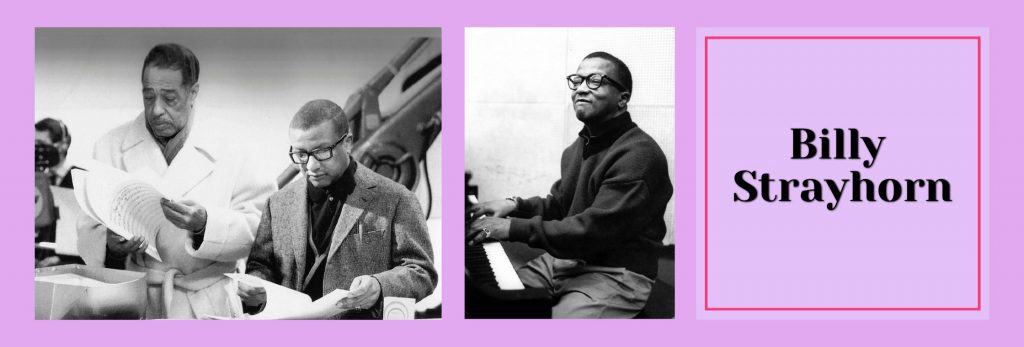
Billy Strayhorn
Over the past few years, I have come across the name Billy Strayhorn time and again, whether in social media posts, DJ sets focusing on queer artists, or when googling queer influences on jazz and swing. But it wasn’t until I did some more extensive research for a small exhibition on queer artists in jazz and blues last year that I realized what a significant influence Strayhorn had on jazz and, in particular, on Duke Ellington’s music. During my research, I eventually came across David Hajdu’s biography “Lush Life: A Biography of Billy Strayhorn” (1996). Although the internet provides some basic facts and information about Billy Strayhorn’s life and music, this book gave me a much broader, more complex, and more personal view of Strayhorn’s life. I was fascinated, amazed, and above all, moved. Fascinated by the musical genius that Strayhorn is described as, by his journey from classical music to jazz, by his close connection to Duke Ellington, and by the many, sometimes contradictory, facets of this collaboration.
Queer Lindy Hoppers of the Harlem Renaissance
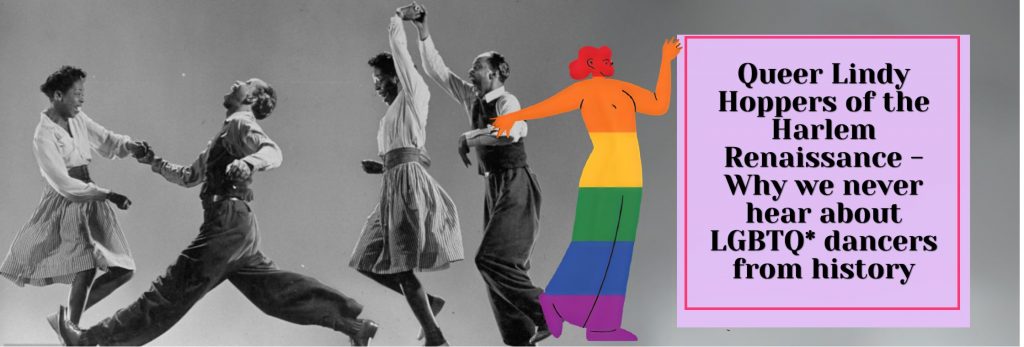
Despite societal pressures and legal restrictions, a vibrant and visible queer world thrived in Harlem during the 1920s and 1930s, significantly influencing and participating in the era’s culture.[mfn]cf Riemer&Brown, p. 56; for an accessible introductions to Queer Harlem Renaissance, check out Johnson’s Flamboyants. The Queer Harlem Renaissance I Wish I’d Known[/mfn] While we regularly mention icons like Frankie Manning and Norma Miller, we never highlight any LGBTQ+ dancers.[mfn]Some authors mention that dancers like Leon James and Al Minns were rumored to have been queer (Fürnkranz, p. 43); however, there does not seem to be a lot of evidence for this.[/mfn] Even though we may never find a famous queer Lindy Hopper from the old days, the evidence shows that queer people were actively participating in and shaping a social dance scene, especially in private and semi-public spaces.
