

Billy Strayhorn
Over the past few years, I have come across the name Billy Strayhorn time and again, whether in social media posts, DJ sets focusing on queer artists, or when googling queer influences on jazz and swing. But it wasn’t until I did some more extensive research for a small exhibition on queer artists in jazz and blues last year that I realized what a significant influence Strayhorn had on jazz and, in particular, on Duke Ellington’s music. During my research, I eventually came across David Hajdu’s biography “Lush Life: A Biography of Billy Strayhorn” (1996). Although the internet provides some basic facts and information about Billy Strayhorn’s life and music, this book gave me a much broader, more complex, and more personal view of Strayhorn’s life. I was fascinated, amazed, and above all, moved. Fascinated by the musical genius that Strayhorn is described as, by his journey from classical music to jazz, by his close connection to Duke Ellington, and by the many, sometimes contradictory, facets of this collaboration. I was amazed by the extent of Strayhorn’s influence on Ellington and dismayed by how his work repeatedly went unrecognized by the public (which was also related to the fact that it would not have been safe for Strayhorn, as an openly gay Black man, to be too much in the public eye). But above all, I was touched by the testimonies of his friends, colleagues, and partners, who describe someone who was not only a great artist throughout his life, but also a lovable and inspiring person. Billy Strayhorn was appreciated, liked, and loved for his hospitality, modesty, and generosity, his intelligence, clarity, and level-headedness. He is described as a person who never sought the spotlight or fame, but whose musical genius was on par with the greatest in jazz. A person who gathered his friends around him and fostered community, who loved to cook for others, play the piano, listen and give advice, and who was always there for his loved ones.
Grateful for the wealth of personal insights, stories, and information in the biography (which had remained hidden from me in the often brief internet articles), I decided to capture aspects of the biography in a longer post—hoping to spark curiosity and with the absolute recommendation to read the book yourselves. It is written in a very pleasant, narrative style, with many quotations, and is 100% worthwhile. Here then a summary, which is by no means exhaustive, but hopefully provides some useful, interesting, or inspiring insights.
All quotations and references in this article refer to the following edition of the biography:
Hajdu, David. 1996. Lush Life – A Biography of Billy Strayhorn. London: Granta Books.
“‘One day I saw him in the park with a big sheet of music paper, and I asked him what he was writing. He said, ‘Oh, something for string.‘ I said, ‘What?‘ And he said, ‘Oh, just something for myself. Just for me.‘ I looked down at the music paper, and it was a complete orchestral score. He was writing a symphonic piece right there in his head, sitting in the park.’” (p. 199)
Billy Strayhorn was born on 29 November 1915, in Dayton, Ohio. He developed an early enthusiasm for music and showed an unusual gift. While still a child, alongside going to school, he worked as a delivery boy for a drugstore to save money for his own piano (cf. pp. 10–12) and, as a teenager, composed what would later become his signature piece, Lush Life (cf. p. 34), as well as an entire musical (cf. p. 22). Billy Strayhorn originally wanted to become a classical pianist and pursued this goal throughout his school career. But as a Black young man, he was denied access to the classical music scene (cf. p. 19). Strayhorn finally discovered his enthusiasm for jazz through the recordings of Art Tatum and Teddy Wilson, whose music fascinated him (cf. p. 32).
When he made his deliveries to the drugstore’s customers, they often asked Billy to come in and play something for them on the piano. This is how Billy Strayhorn became known in the white neighborhood where the drugstore was located. Soon people were hiring him to play at private parties, and through friends of friends, Strayhorn was ultimately introduced to Duke Ellington on 1 December 1938. The Duke Ellington Orchestra was performing in town, and after the first show, Billy was taken backstage to meet Duke. As the story goes, Ellington was sitting in his armchair and, without opening his eyes, simply said: “’Sit down at the piano, and let me hear what you can do’” . Strayhorn played an Ellington piece, Sophisticated Lady, exactly as Duke had performed it on stage shortly before. Then he said, “’Now, this is the way I would play it,’” (p. 50) and proceeded to present his own arrangement. Suddenly, Ellington was all ears. He asked Strayhorn to continue playing and called in other band members to listen (cf. pp. 47–50).
“Greenlee recounted: ‘Billy was playing. Duke stood there behind him beaming, and he put his hands on his shoulders, like he wanted to feel Billy playing his song.’” (p. 51)
In the days that followed, while the band remained in town for more concerts, Duke gave Billy Strayhorn various assignments: to write lyrics for one piece, an arrangement for another. He was so pleased with the results that he eventually offered Strayhorn a job. Along with a $20 bill for his arrangement of Two Sleepy People, Ellington pressed a piece of paper with directions to his apartment in New York into Billy Strayhorn’s hand. This handwritten note marks the beginning of a story of extraordinary collaboration, mutual inspiration, and enormous musical productivity (cf. pp. 52–53).
However, Strayhorn didn’t just use Duke’s directions to find Ellington in New York. He also used them as the starting point for a new composition with which he wanted to impress Ellington. This is how Billy Strayhorn wrote what would later become Duke Ellington’s signature piece and greatest success: Take the “A” Train. Strayhorn initially discarded the piece because he feared it sounded too much like Fletcher Henderson, and it would be years before Mercer Ellington (Duke’s son and also a musician) rescued the song from the trash. Nevertheless, the story behind the creation of Take the “A” Train is indicative of how closely Strayhorn’s and Ellington’s music and careers were intertwined and the symbiotic musical relationship that connected the two (cf. pp. 55/56, pp. 84/85).
Ellington took Strayhorn under his wing, even though strictly speaking he did not need an additional pianist, composer, or arranger—he fulfilled all these roles himself. Strayhorn had no clearly defined job, no contract, and no regular salary. However, Ellington covered the costs of accommodation, food, and other expenses and made sure that Strayhorn wanted for nothing. Strayhorn began spending a lot of time with Ellington’s family and eventually moved in with them. Initially, he was given minor, short-term arrangement assignments, but soon Strayhorn was arranging most of the pieces for the smaller ensembles under Ellington (cf. pp. 57/58, 60).
New York offered Billy Strayhorn the opportunity to develop – and not just musically:
“Strayhorn didn’t so much transform in New York as take form; in New York, his amorphous youthful ideal of urban élan could finally be made real. ‘He had always had a certain vision of himself,’ said Lillian Strayhorn Dicks. ‘But it never had a chance to come out until he went to New York and met the right people and went to the right places. Then he really came alive.’” (p. 76)
Strayhorn was a man of refined taste. He loved cashmere and silk, was always well dressed, visited exhibitions and museums, and bought a book on etiquette, which he studied as thoroughly as others would study a novel. He was interested in fashion, wine, and all things French (cf. pp. 58/59, 76). He and Aaron Bridgers, his long-time partner, enjoyed conversing in French on the subway – just to irritate their fellow passengers a little: “‘The sight of two black men together then, speaking French, would confound people to no end.’” (p. 66).
“As he came into his own in New York, Strayhorn began to move in a circle of like-hearted spirits, most (though not all) black and gay” (p. 71).
Strayhorn shared an apartment with Bridgers, where the two regularly welcomed guests. Bridgers took on the role of bartender, while Strayhorn took care of the food. He cooked with passion and creativity and loved to host and entertain his friends. He rarely attended parties in New York’s gay or queer scene; instead, he preferred to invite friends and acquaintances to his home. Many of them were also Black and gay, but this was hardly ever discussed. The important thing was that they had each other and spent time together (cf. pp. 68/69, 72/73, 116).
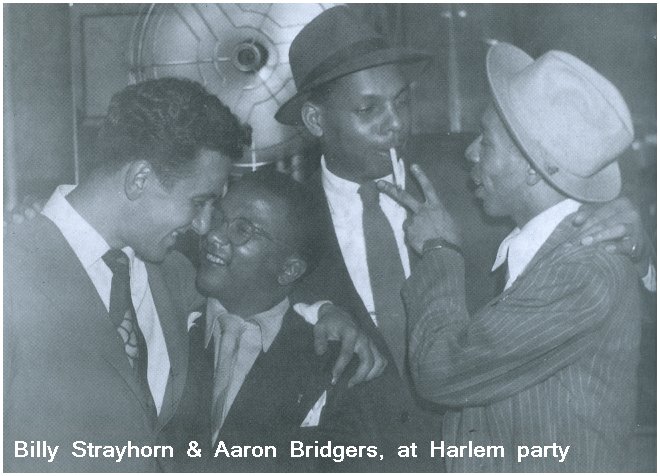
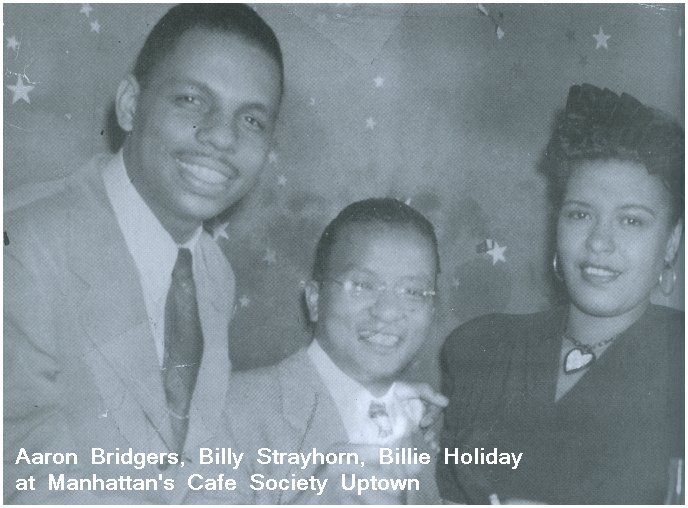
“‘Living with Billy was wonderful. It was a wonderful time of life for us,” said Bridgers. “We were just coming into our own. We discovered everything together.’” (p. 68).
Billy Strayhorn was one of the few Black gay men of his time who were (almost) completely open about their homosexuality. When Jimmy Hamilton, clarinetist with the Ellington Orchestra, invited him and his wife to dinner, Strayhorn naturally brought Aaron Bridgers along:
“‘It was me and my wife, so Billy thought it should be him and Aaron – as natural as that. We all hung out and ate beans and drank together like it was nothing, even though it was actually something, really,’ Hamilton recalled. ‘There wasn’t a lot of guys who was homosexual and acted like that, like there it was and you have to accept it – and if you don’t, that’s your problem.’” (p. 70)
Bridgers was quickly accepted into Ellington’s family and was as much a part of family life as Strayhorn:
“‘We accepted Aaron as a new member of the family, because he was with Billy,’ said Ruth Ellington Boatwright. ‘They came around all the time and made no bones about it. They were together, and that’s how it was. They didn’t go through the motions of any kind of pretense.’” (pp. 69/70)
A friend of Strayhorn’s noted that Billy’s open approach to his homosexuality was also made possible by the protection and support of Duke Ellington. This allowed Strayhorn to express himself artistically and compose for the Ellington Orchestra, sparing him many of the hardships he would likely have faced as a pianist or bandleader (cf. p. 79):
“‘The most amazing thing of all about Billy Strayhorn to me was that he had the strength to make an extraordinary decision – that is, the decision not to hide the fact that he was homosexual. And he did this in the 1940s, when nobody but nobody did that,’ declared his gay black musician friend. ‘We all hid, every one of us, except Billy. He wasn’t afraid. We were. And you know what the difference between us was? Duke Ellington. […] Billy could have pursued a career on his own – he had the talent to become rich and famous – but he’d have had to be less than honest about his sexual orientation. Or he could work behind the scenes for Duke and be open about being gay,’ said his friend.” (pp. 79/80)
Not everyone accepted Strayhorn’s homosexuality as naturally as his friends or Ellington’s family did. Publicist Joe Morgen, who worked for Ellington from 1957 onwards, made Strayhorn’s life particularly difficult:
“‘Joe Morgen hated Billy with a passion that was beyond all understanding,’ said Jacobs. ‘For one thing, Morgen thought that Billy represented competition for Duke’s attention, and that Joe Morgen couldn’t bear. And Billy was gay, which threw Morgen completely off the deep end. Just the mention of Billy Strayhorn’s name drove Joe Morgen crazy. The very idea of Billy made him nuts.’” (p. 167)
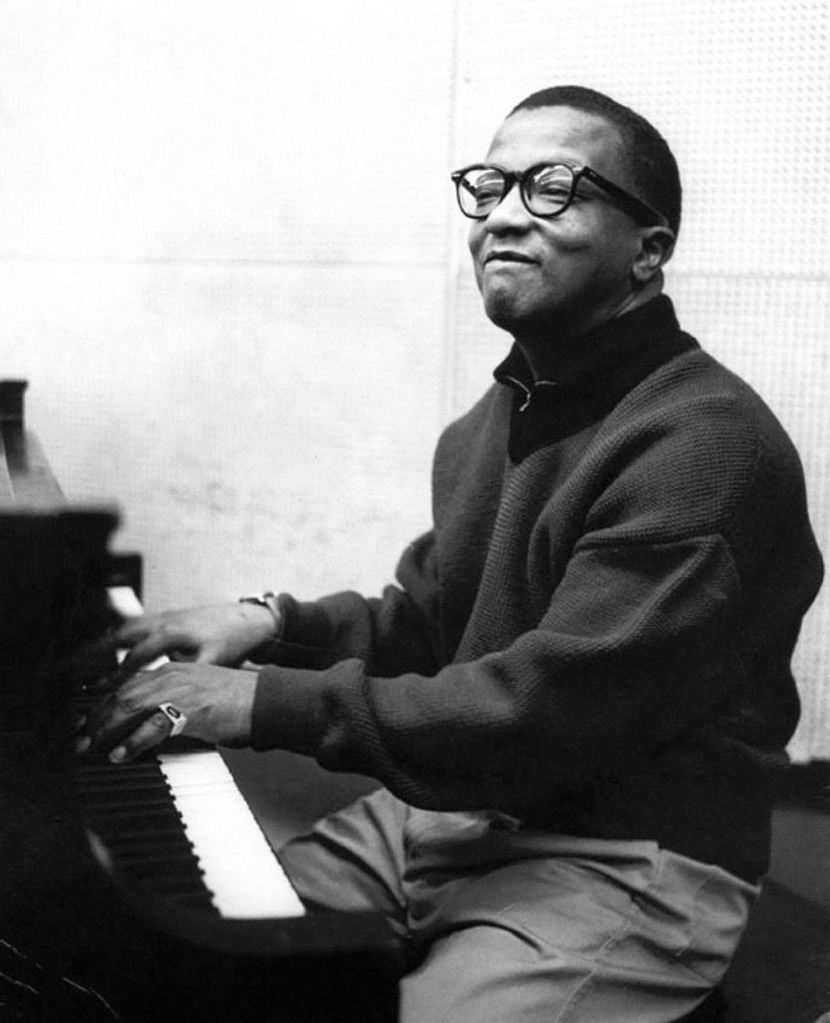
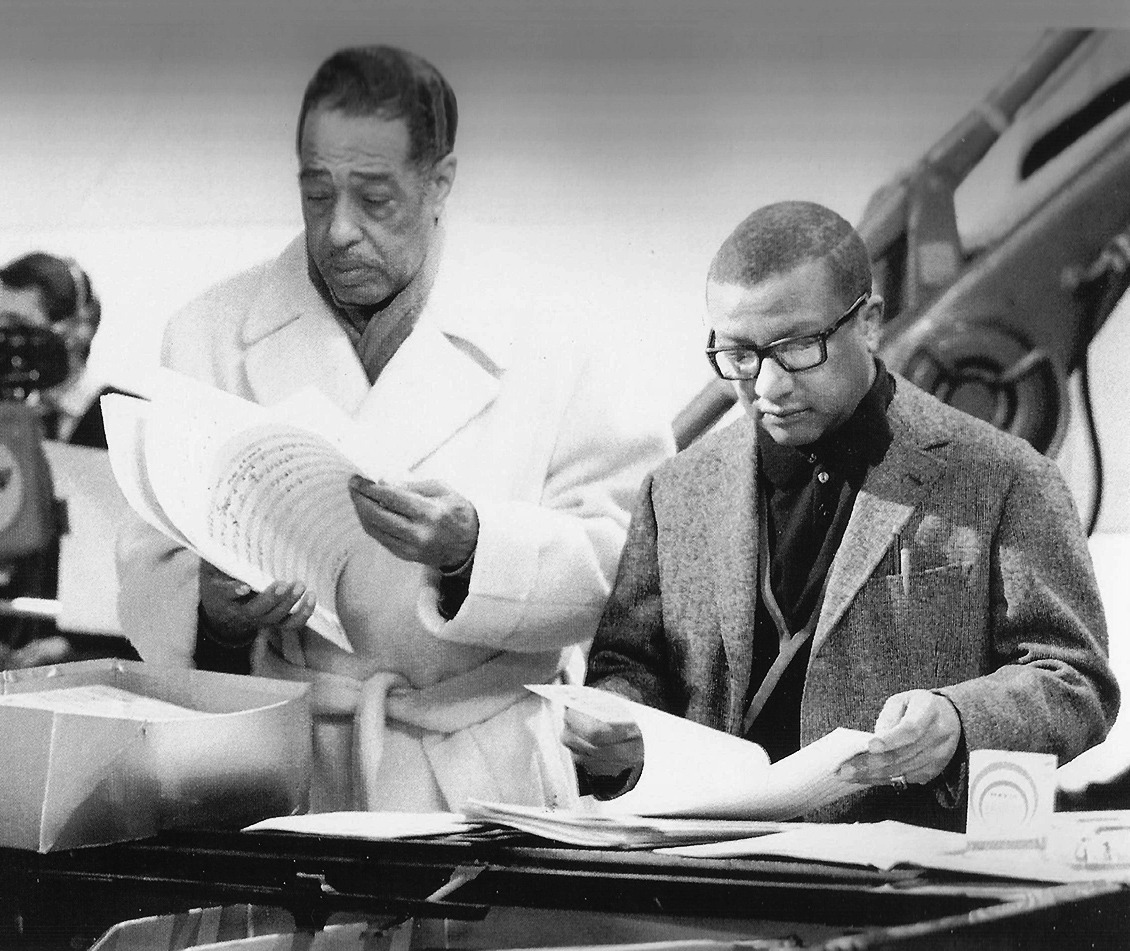
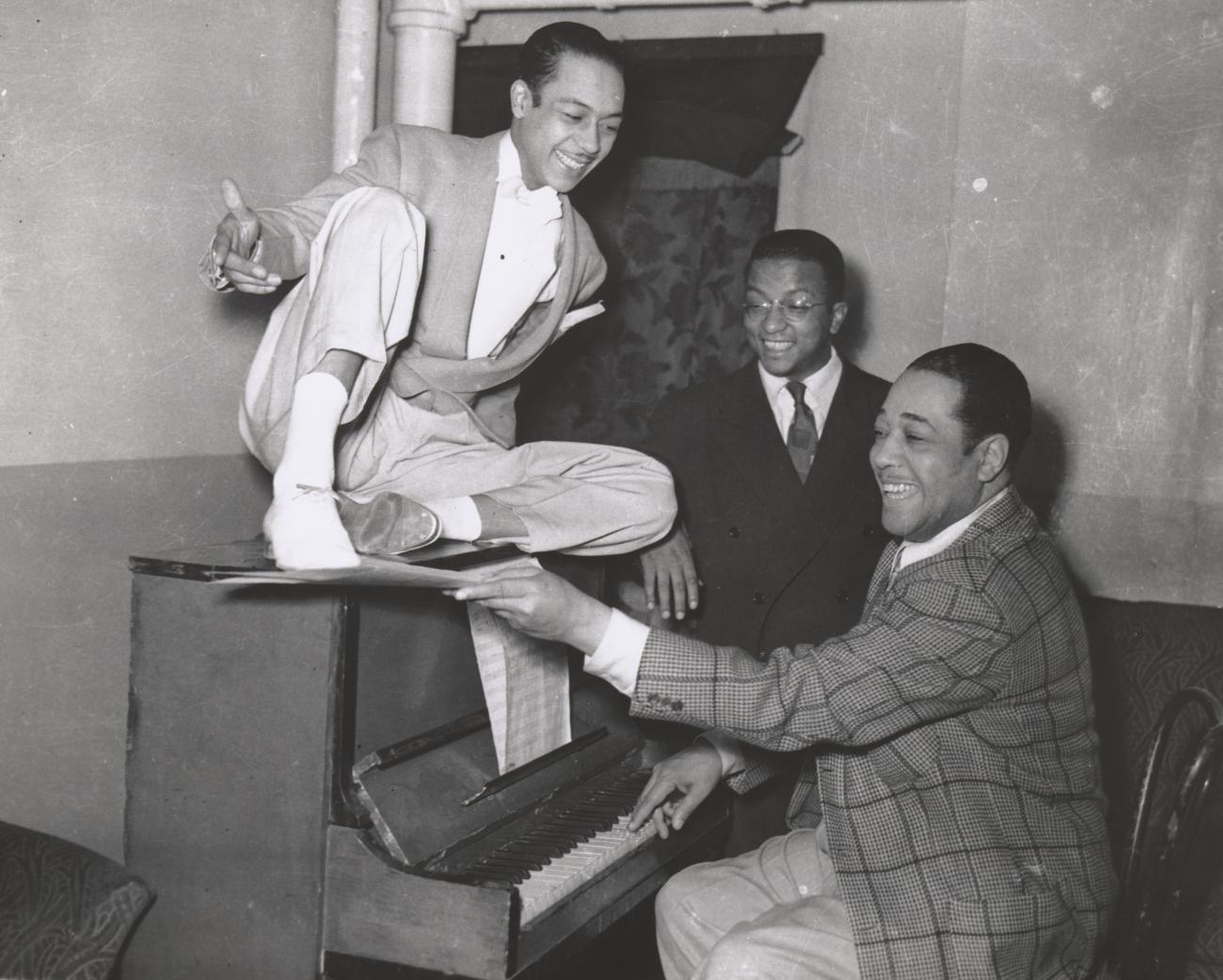
Billy Strayhorn’s artistic work therefore took place predominantly behind the scenes for a variety of reasons. These included, on the one hand, a conscious balancing act between public visibility as an artist and relative freedom in his private life, and on the other hand, his strong focus on music and a lesser interest in showmanship and fame. While Ellington sought the spotlight, Strayhorn was more reserved and introverted by nature. Added to this were the mechanisms of the music industry and business considerations: the name “Duke Ellington” was established and could be successfully marketed. Joe Morgen’s PR work, which consistently put Ellington in the spotlight and systematically concealed Billy Strayhorn’s name, also contributed to Strayhorn’s work and his influence on Ellington’s music remaining mostly hidden from the public (cf. pp. 167–172).
For a long time, Strayhorn did not seem to be bothered by the lack of recognition, but over the years it began to gnaw at him more. Even though he rarely showed his dissatisfaction openly, his friends noticed the growing frustration that resulted from his dependence on Ellington and the imbalance between his artistic contribution and the public attention he received (cf. pp. 117, 121/122, 171). It was apparently less about money—financially, Ellington provided Strayhorn with everything he needed—and more about artistic self-determination:
“‘Money wasn’t quite the problem. How could it be, when Billy had everything?’ asked Leonard Feather. ‘The problem was the lack of independence that his business problems represented. Billy couldn’t very well do very much [work] of his own if he was entirely dependent upon Ellington for all his needs. The actual source of his frustration was artistic.’” (p. 122)
During this period, Strayhorn found enjoyment, affirmation, and joy in projects he was able to pursue outside of “Ellingtonia”, such as the records he recorded with Johnny Hodges starting in 1955, on which he also played piano (cf. p. 178). Another project that had nothing to do with Ellington was the annual shows he wrote from 1951 onwards for the Copasetics, a group of Black tap dancers that included Honi Coles and Cholly Atkins, among others. Strayhorn had met the Copasetics in the early 1950s and, although he was not a dancer, became part of the group and even its president. The Copasetics (named after a popular exclamation by tap dancer Bill “Bojangles” Robinson) met every Sunday afternoon, preferably at Strayhorn’s home, as everyone appreciated his hospitality and cooking skills. Strayhorn put a lot of work and energy into the Copasetics, probably because the group also gave him a lot of love and attention. Honi Coles, whom Strayhorn called “Father”, remained one of his closest friends and confidants until the end of Strayhorn’s life (cf. e.g. pp. 117-119, pp. 171-172, pp. 174-176).
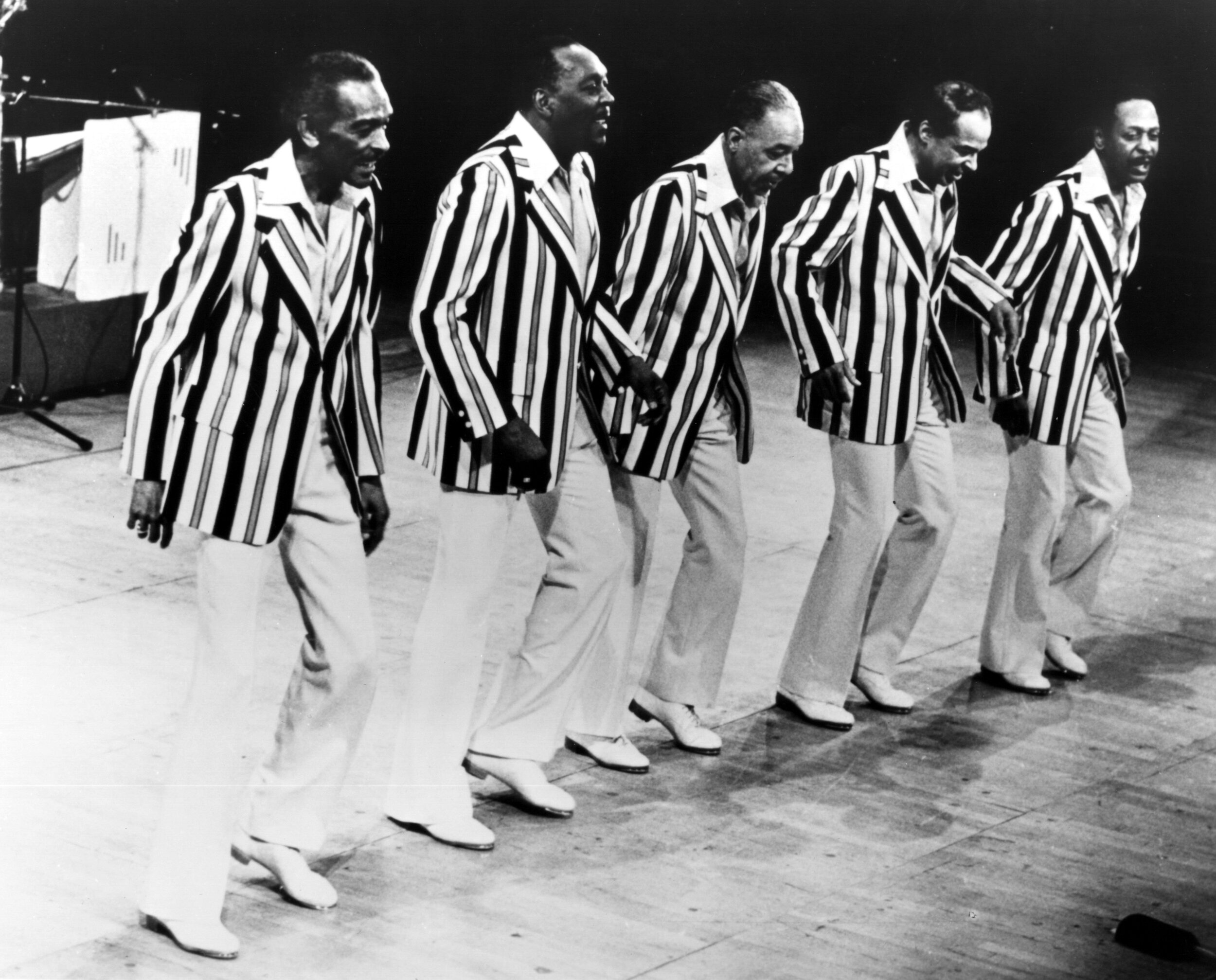
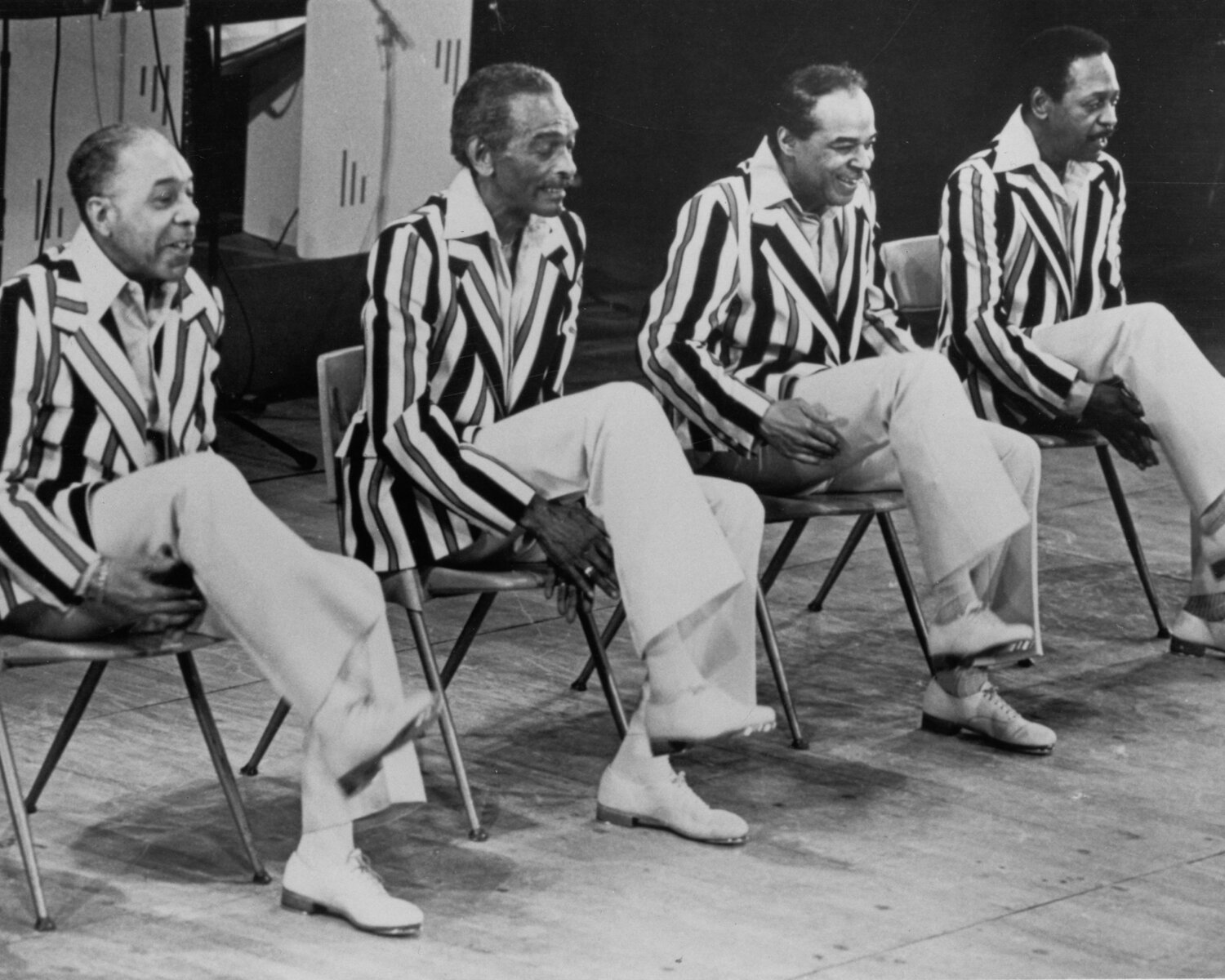
“Busmen on holiday, the Copasetics always seemed to end up dancing at some point in their meetings, if only on the pretense of settling an argument about a step; Strayhorn would hop to the piano stool, and a Sunday gathering of gentlemen upended into a cutting session” (p. 118)
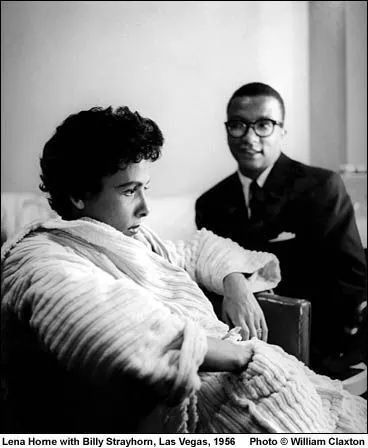
Billy Strayhorn is repeatedly described as a person who gladly and generously shared his knowledge and skills, whether in music or other areas, without displaying even a hint of arrogance. Dorcas Neal, who ran the “Neal Salon” with her husband (a gathering of predominantly Black and queer artists that Strayhorn joined in 1950), reported that the other members were initially somewhat intimidated by Strayhorn’s reputation as a genius, “[b]ut he was a very charming and very generous person, and he got very close to everybody and even started working on things with people” (p. 115). Lena Horne, a close friend of Strayhorn’s, also recounts:
“‘He could tell I was a person who had missed a lot in life and wanted to know everything, and he was so bright. I hadn’t gone to school very much, and he was very scholarly. I’d always been a snob against education. But I learned from him; things I would never have thought to ask a teacher about, I could ask him. We talked about everything. We talked about what it was like to be a woman and what it was like to be a man, and we talked about how mixed up each of the sexes were and how better off we’d all be if we were even more mixed up together. He wasn’t like a professor – he was like you imagine a professor to be. He was brilliant but gentle and loving. He never made you feel dumb.’” (p. 95)
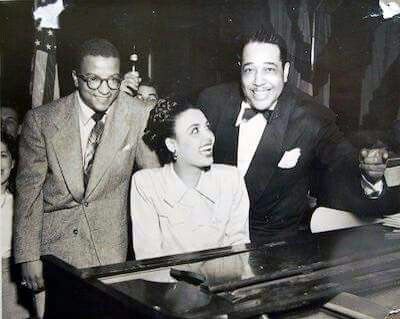
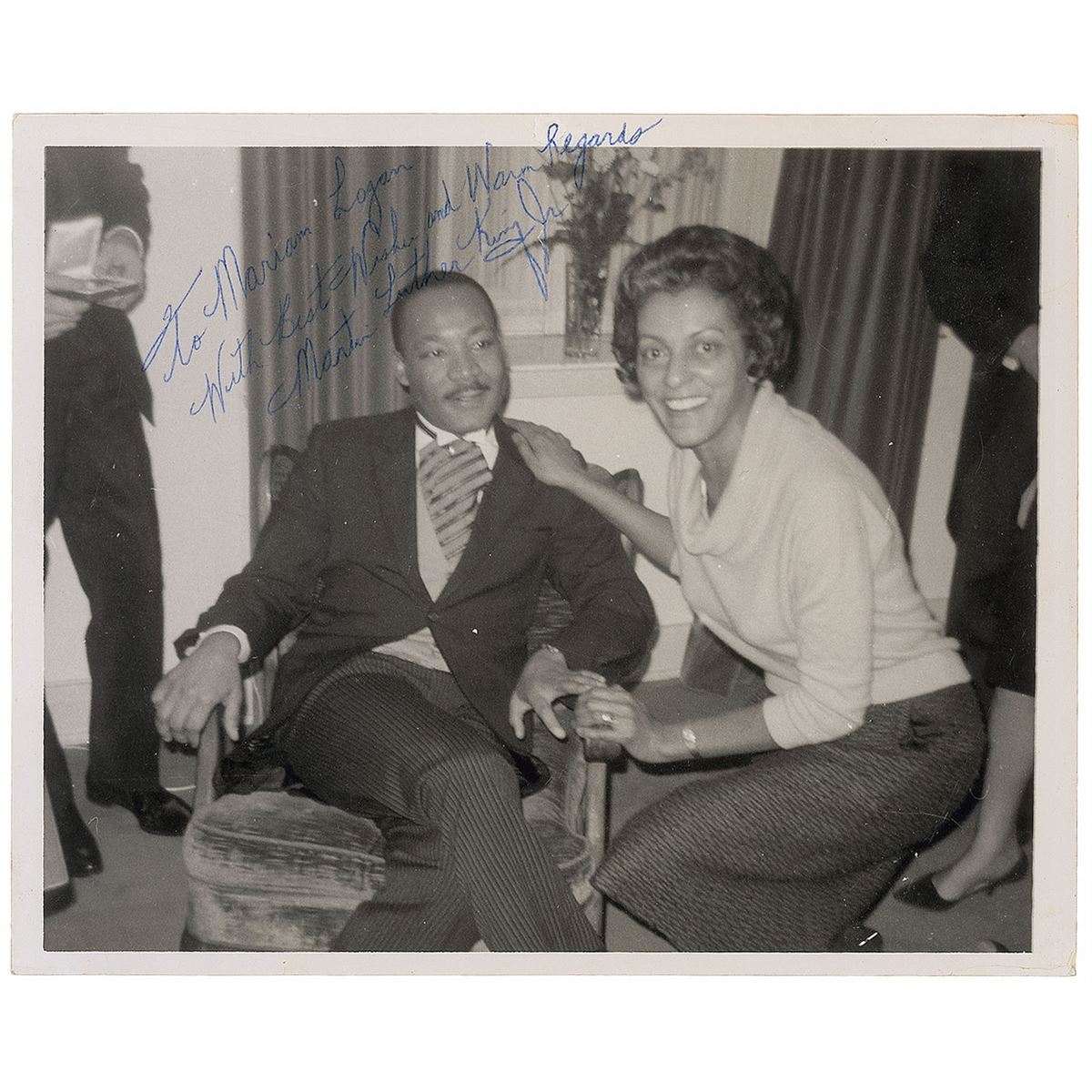
Lena Horne and Billy Strayhorn were close friends until his death. They enjoyed visiting museums together, listening to music, talking for hours, and helping each other through difficult times in their lives (cf. p. 95). Horne described Strayhorn as “the only man I really loved” (p. 95). He supported Lena Horne in her musical development and later also in her involvement with the civil rights movement. Strayhorn had a keen political awareness and closely followed what was happening in the civil rights movement. He spent nights talking about politics with his good friend Marian Logan and, through Marian and her husband Arthur (who became Duke Ellington’s personal physician), he also got to know Martin Luther King, with whom he got along very well. Together they organized fundraising events at the Logans’ apartment, where Strayhorn played the piano (cf. pp. 223/224). Unlike Strayhorn, Lena Horne was less politically informed. As a light-skinned Black woman, she was also sometimes treated with hostility by Black activists for presenting herself as “too white,” which led to feelings of guilt and self-hatred. Billy Strayhorn helped her learn to accept herself and find her own voice. In 1963, he accompanied Lena Horne to a large NAACP protest in the South, in Jackson, Mississippi. He encouraged her to sing at the demonstration and helped her learn the songs for it (cf. pp. 225-228).
Honi Coles noted: “‘[It] gave him something to work for. He was a fighter, and he was even more of a minority than most of us, because of his lifestyle orientation. He kept the drinking under control or he was hiding it very well – you never know. But it was a pretty good time for him.’” (p. 230) Before this, Strayhorn’s alcohol addiction had been getting progressively worse. This was probably exacerbated by his growing frustration and nagging dissatisfaction with the lack of freedom and recognition he received for his artistic work. The toxic relationship with his then partner, Francis “Goldie” Goldberg, which ended in 1964, probably didn’t help either (cf. pp. 182, 188, 201). Marian Logan reported:
“‘[H]alf the time, he was a wasted man. He couldn’t talk. He was drinking day and night. Half the time, he wasn’t really there. He was a shell. But nobody could tell unless you really knew him. […] If you really knew him, you knew what a bad state he was in. […] You never knew how he was going to be. He drank just constantly, in every imaginable situation. He wasn’t looking for reasons to drink. It was beyond reasons. He just drank. If he was down, he drank to drown it, and if he was up, he drank to celebrate. He drank for relaxation. He drank for fun.‘”(p. 196)
In 1964, Billy Strayhorn was diagnosed with esophageal cancer, probably as a result of his heavy drinking (cf. p. 232). Only a few people knew about his illness at first, including Marian and Arthur Logan (who had diagnosed Strayhorn), as well as Honi Coles, Lena Horne, and Duke Ellington. After his diagnosis, Strayhorn became more serious, both in terms of music and in general. He was less willing to put energy into Ellington’s projects and talked about writing classical music again. In the winter of that same year, he began a close romantic relationship with Bill Grove, whom he had met through mutual friends. Grove was white, which threw some people at first, until they saw how well Grove and Strayhorn suited each other. Grove was a very quiet, serious, and precise person, and he seemed to be exactly what Strayhorn needed at that moment. “‘They both drank like it was water, but they talked a lot and Grove listened to Strays. He was a listener; Goldie was a talker. They went to the movies. They read magazines and books.’”, recounted Marian Logan. “‘With Bill Grove, Billy Strayhorn slowed down, as if to stretch time.’” (cf. pp. 235-236).
During the three years leading up to his death, Billy Strayhorn continued to write and play music. For the first time in his career, he was given the opportunity to play his own concert, organized by the Duke Ellington Jazz Society (a group of Ellington enthusiasts that had formed six years earlier). Strayhorn put together a three-part program consisting entirely of his own compositions or co-compositions with Ellington. It included a solo piano part, a trio part, and a part with a small band that Strayhorn had put together and christened the “Riverside Drive Five.” The concert was a resounding success, and the hall was filled with enthusiastic jazz fans who knew and appreciated Billy Strayhorn’s work, yet were still surprised by his outstanding piano skills (he rarely got the opportunity to play on stage himself). Ellington missed the concert, but his sister told him about the successful evening so enthusiastically that he arranged a recording session afterwards, so that Strayhorn and his band could record the concert pieces as an album (cf. pp. 237-240).
The last piece Billy Strayhorn wrote was Blood Count, a suite for piano and French horn. Strayhorn wrote it with the wish that the musical duo Dwike Mitchell and Willie Ruff would play it for him privately (cf. pp. 250–251). Ruff said of the piece:
“‘It takes so much, it’s so emotionally involved, that I was drained for days after playing it. […] Its meaning is so strong. It’s really Billy’s autobiography. It’s really the last words from a great genius shutting down before his time. It’s all about frustration and anger – lost chances, missed opportunities. He’s saying, ‘I’m mad! Goddamn it!’. He’s mad because he’s checking out and he wasn’t done. You know, he could have done anything. He could have been the biggest of the big. He could have done it, man. His genius is right there in his music. But there he was, checking out, and nobody except the musicians and few of the writers in the jazz magazines knew who Billy Strayhorn was. He looked back at his own life and he couldn’t find himself.’”(p. 251)
Billy Strayhorn died on 31 May 1967, with Bill Grove at his side.

